Some rum festivals start when you get your first glass in hand.
The Caribbean Rum & Food Festival starts much earlier than that.
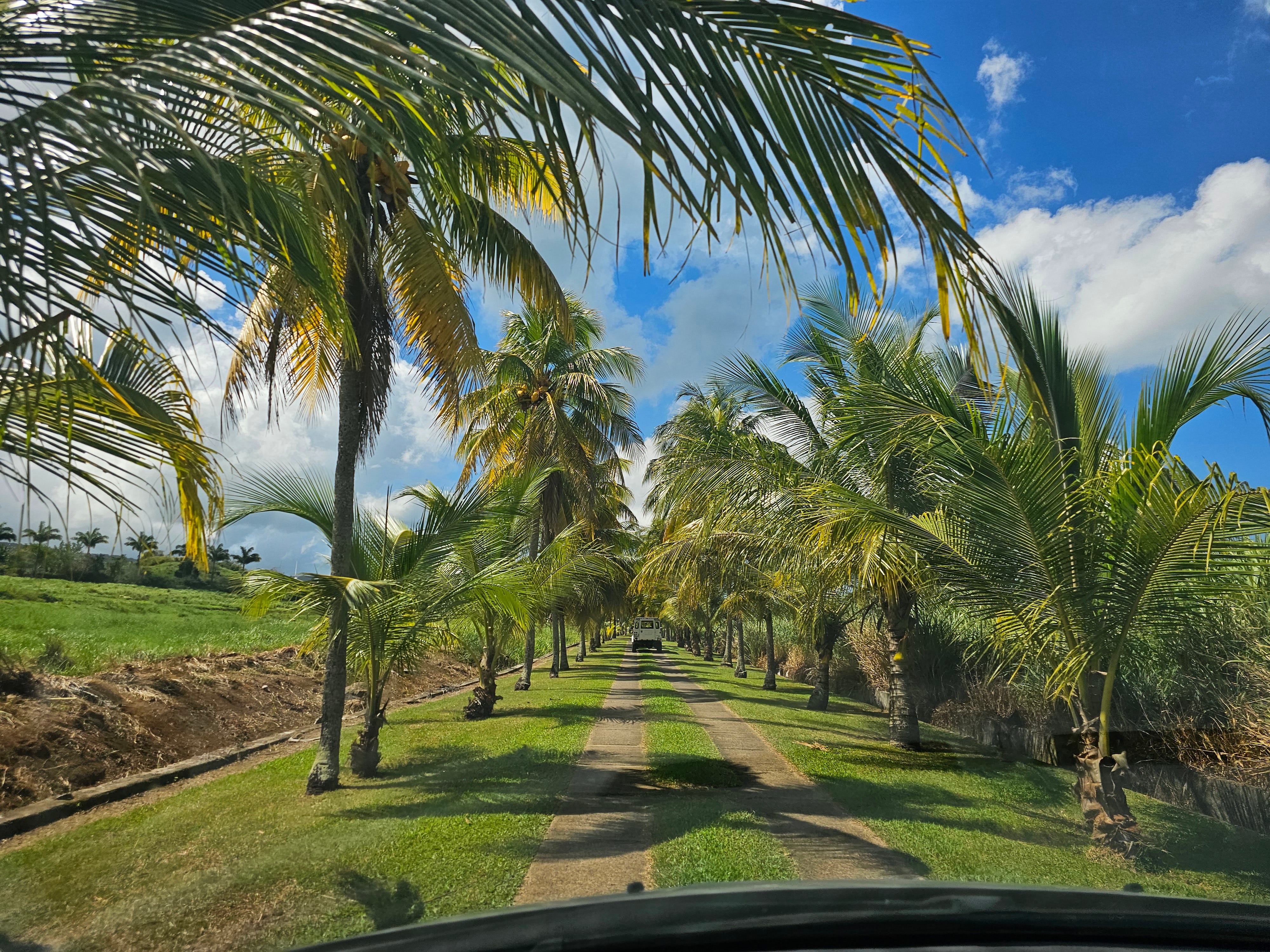
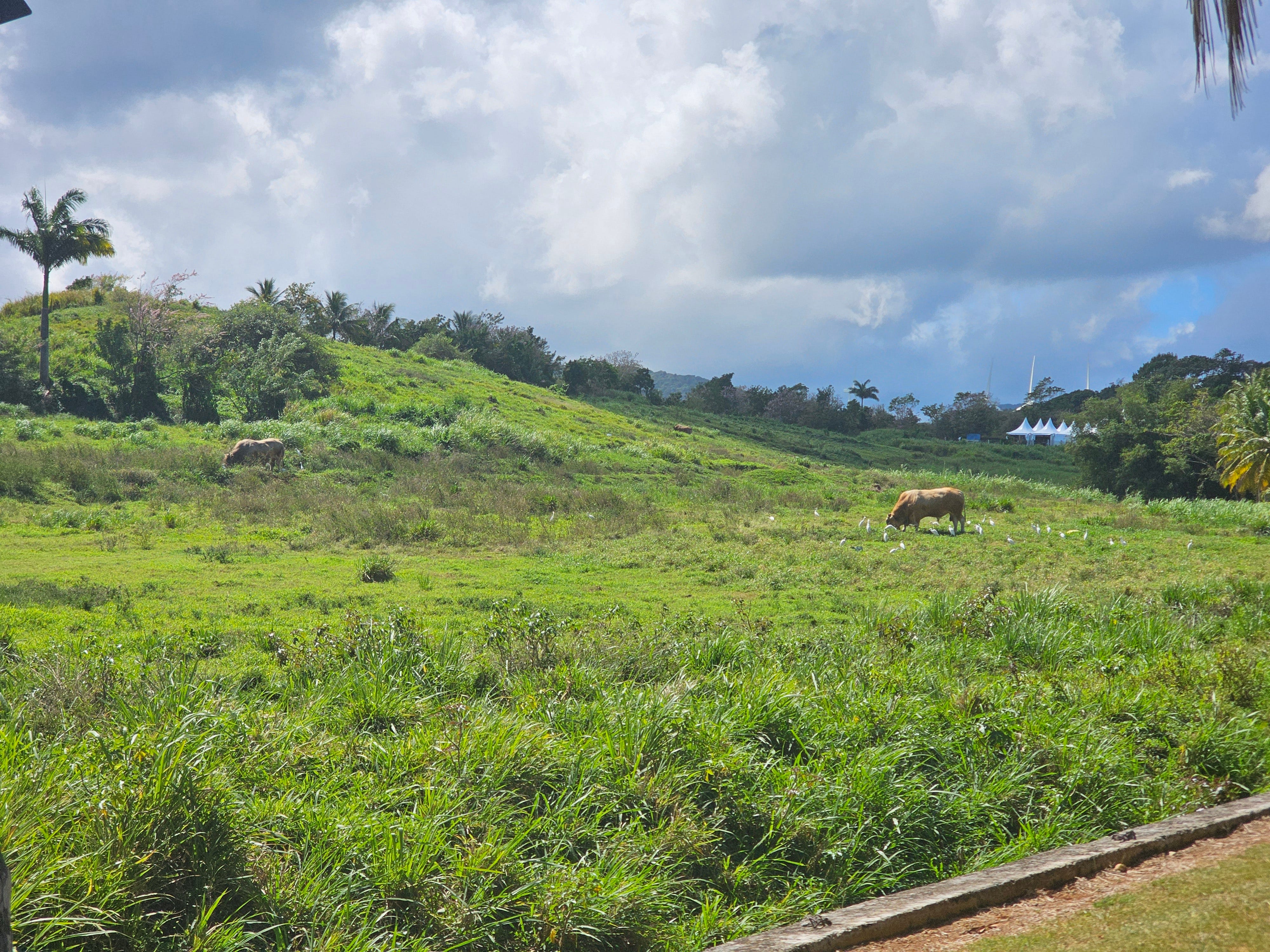
Driving up to the Ranch du Comté, also known locally as El Rancho, in Sainte-Rose on Guadeloupe’s Basse-Terre side, you immediately understand that this will be a different experience. The road climbs gently up a hill, lined on both sides with perfectly aligned palm trees. To the left, grassy slopes rise toward the domain, where cows wander calmly, followed by cattle egrets standing patiently nearby. In the distance, hills roll toward the sea, framed by palms and tropical vegetation.
Before tasting a single drop of rum, the tone is already set.
This year’s edition was also marked by the presence of JoeyStarr as the festival’s official patron. An iconic figure of French rap and a founding member of the legendary Parisian group NTM, JoeyStarr was on site throughout the weekend. Beyond drawing attention and curiosity, he actively contributed to the atmosphere, from evening musical moments to energizing certain stages and animating the masterclass of his own brand. His involvement also highlighted Carnival, the rum brand he is part of, and the release of Cuvée Victorien, presented during the festival.
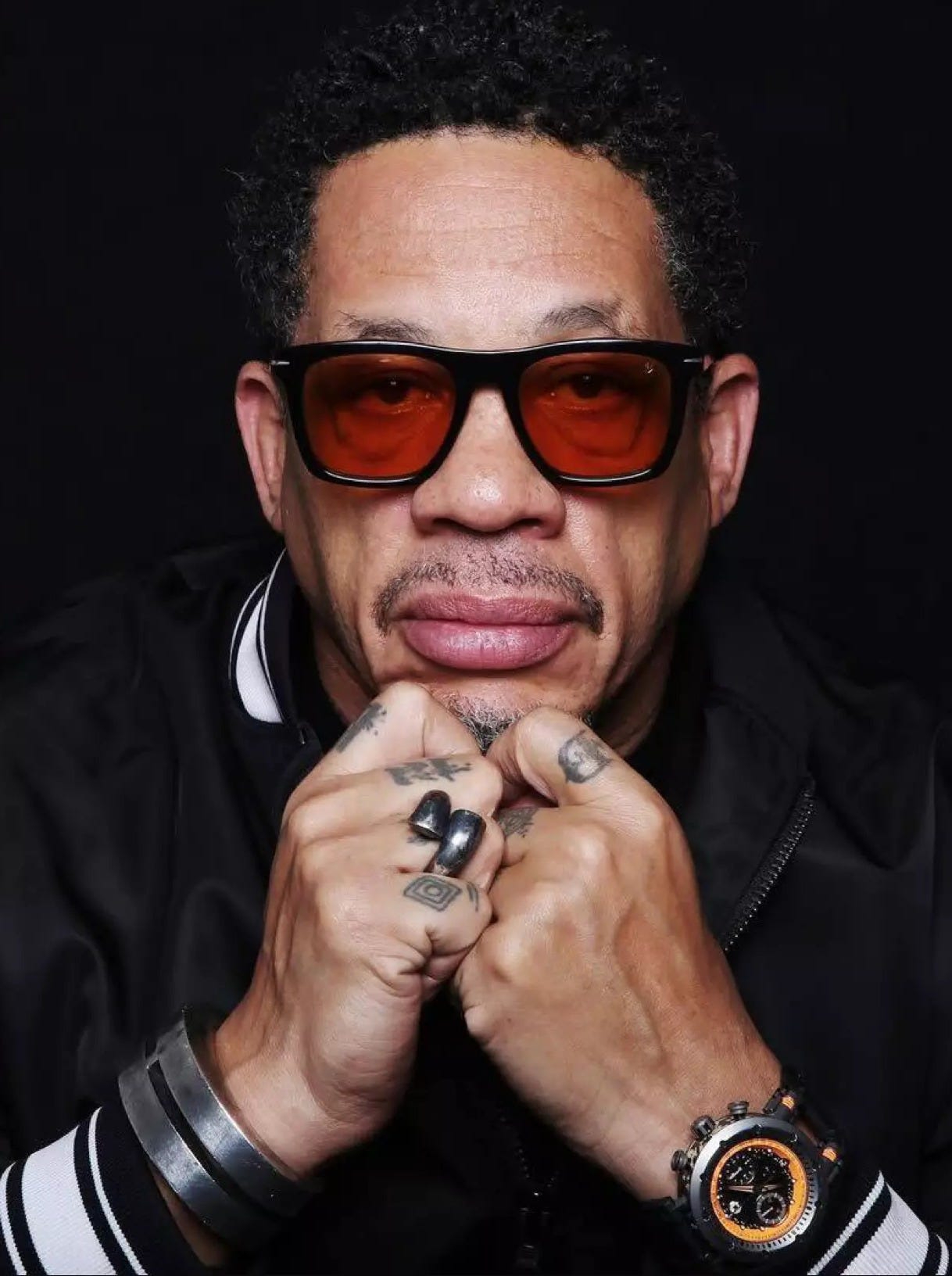
This was my first Caribbean Rum & Food Festival (CRFF), now in its third edition, and it shows. It quickly became clear that this is not just another rum event, but a festival that reflects where Guadeloupean rum stands today and where it may be headed next.
An outdoor rum festival changes everything
Most rum festivals I have attended in the United States take place indoors: conference halls, hotels, ballrooms. Efficient and controlled, but often disconnected from their surroundings.
CRFF is entirely outdoors. That single choice changes everything.
From the top of the hill, the festival opens onto a panoramic view of the surrounding landscape. Palm trees sway gently in the wind, the sea is visible in the distance, and the rhythm of the day feels slower and more grounded. Rum here does not feel isolated from its environment. It feels deeply connected to it.
Tasting agricole rum while looking at the hills where sugarcane grows nearby is a very different experience than doing so under fluorescent lights.


A mature third edition with strong execution
CRFF is in its third edition, and it shows.
Check-in was smooth, VIP access clearly organized, and the flow of the festival made sense. Upon entering the domain, a large central pool anchors the space, with a main bar to the right, two well-equipped stages for talks and masterclasses, and a dedicated VIP area offering a curated selection of special rums.
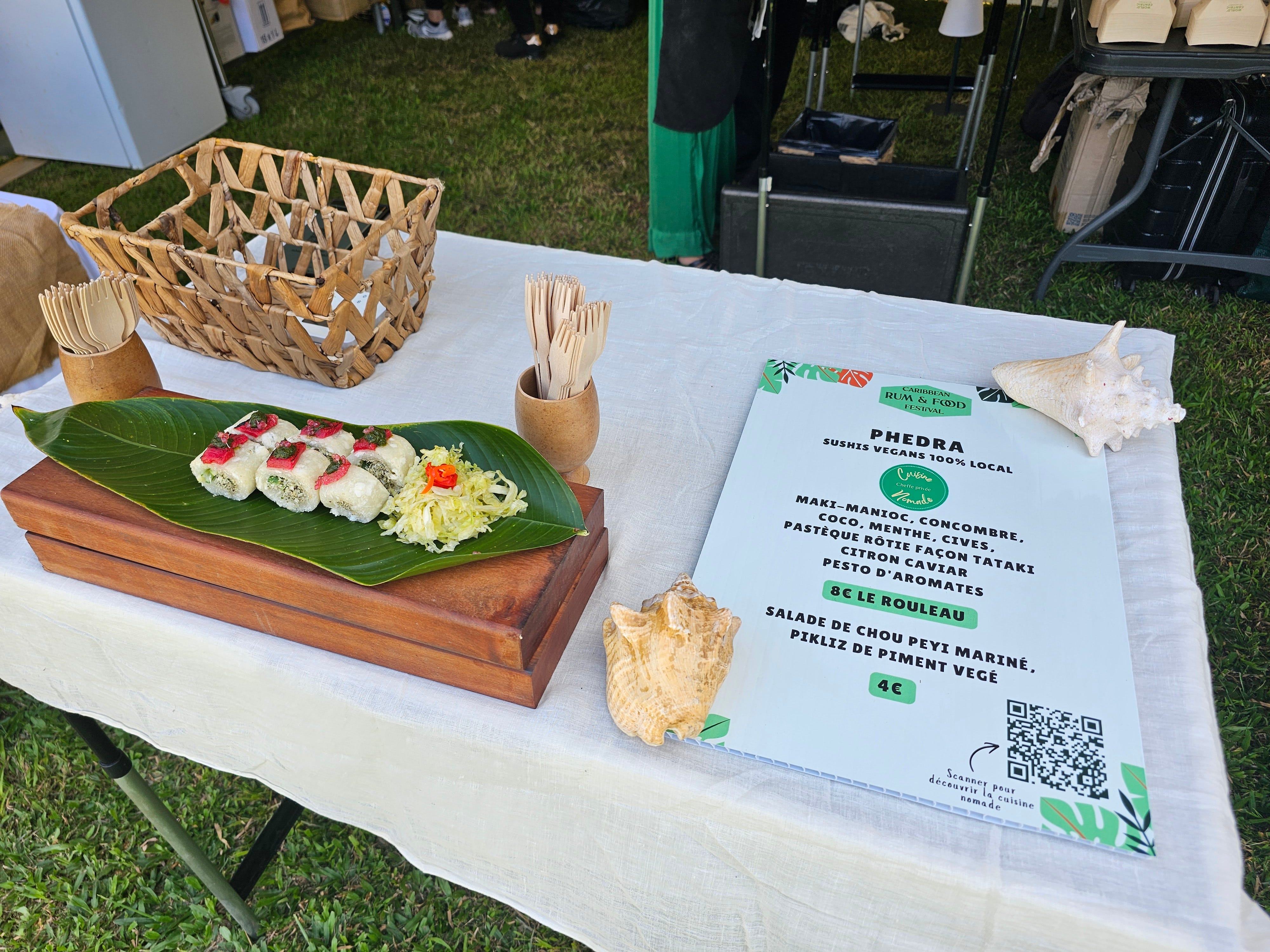
Further back, shaded tables and seating areas allow attendees to eat and rest, while food stands offered a combination of reimagined local dishes and original culinary creations. From there, stairs lead down to a large lower area where most producer stands were located.
Beyond rum producers, this lower area also hosted a variety of local artisans offering rhum arrangés, honey, syrups, coconut-based products, and other creations. This added layer of diversity made the festival feel less like a trade show and more like a living snapshot of local Caribbean craftsmanship.
The layout encouraged exploration without ever feeling crowded or chaotic. It felt like the result of thoughtful planning rather than improvisation.
More than tastings: a festival built around content and community
What really stood out to me was how much emphasis was placed on content, not just pouring.
The festival was structured around three main tracks:
culinary workshops, fully embracing the “Food” side of the Caribbean Rum & Food Festival,
free masterclasses, often brand-led and accessible,
paid masterclasses focused on deeper, educational experiences.
But the most compelling moments came from sessions led by the local rum and cigar communities.
A blind tasting organized by the Vice President of the Club Rhum Guadeloupe (CRG) offered a structured way to explore the island’s diversity. A rum and cigar pairing session, led by the president of the Caribbean Cigar Club, provided a surprisingly refined educational experience. It was striking, and refreshing, to attend a cigar masterclass outdoors in Guadeloupe, where this cultural practice feels far more natural.
These sessions felt authentic, driven by passion rather than promotion.
Agricole at the core, but diversity on full display
CRFF is deeply rooted in agricole rum. Guadeloupe’s distilleries and producers are front and center, and the festival proudly reflects that identity.
That said, this is far from a one-note event.
Molasses-based rums were well represented, and the diversity of styles, techniques, and philosophies on display was impressive. One thing that struck me repeatedly throughout the weekend was the level of technical expertise across nearly every stand. Conversations went far beyond marketing talk. Fermentation protocols, distillation parameters, wood management, and aging strategies were discussed openly and with remarkable precision.
This is not a scene resting on tradition alone. It is a scene actively refining its craft.


What caught my attention: key discoveries and highlights
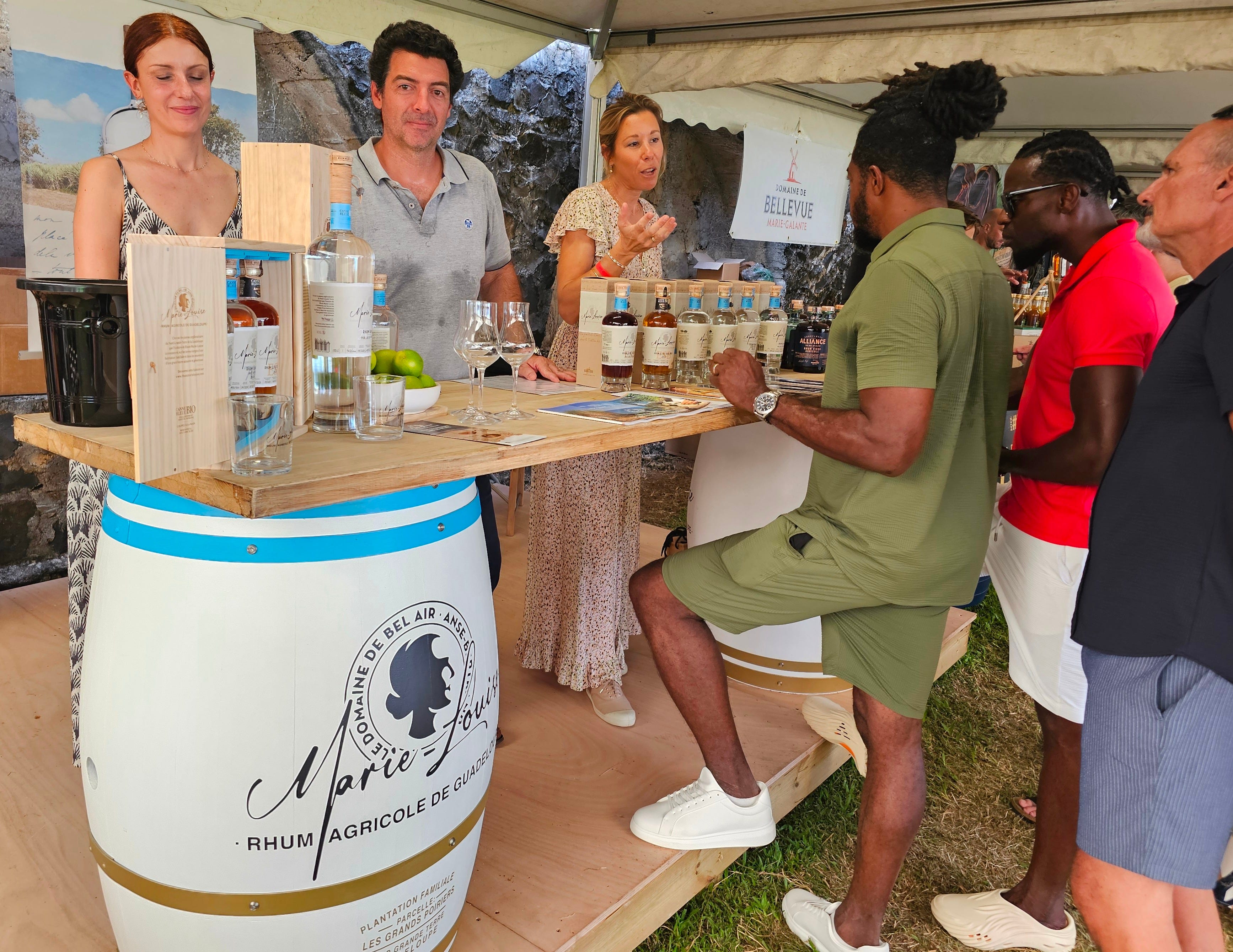
Domaine de Bel-Air and Rhum Marie-Louise — redefining what a rum producer can be
One of my most compelling discoveries was Domaine de Bel-Air, the producer behind Rhum Marie-Louise.
They grow their own sugarcane on estate parcels, using a monovarietal and parcel-driven approach, most notably with blue cane, and focus heavily on preserving the integrity of their terroir. The cane is then distilled in partnership with established distilleries such as Montebello, allowing them to retain authorship over the raw material while independently shaping the aging and final expression of their rums.
The quality of the results fully supports that vision. Their white rum, including expressions like Canne de Lune, showed remarkable clarity, precision, and character. Their élevé sous bois stood out enough that I purchased a bottle on site. Their aged expressions, under the Rhum Alliance project, demonstrated depth and a clear sense of direction.
What makes Domaine de Bel-Air particularly interesting is how this model expands the possibilities of Guadeloupe rum. By controlling the cane and guiding the aging process independently, they contribute to a broader ecosystem where identity is defined not only by distillation, but by vision and intent.
Carnival, a brand to watch closely
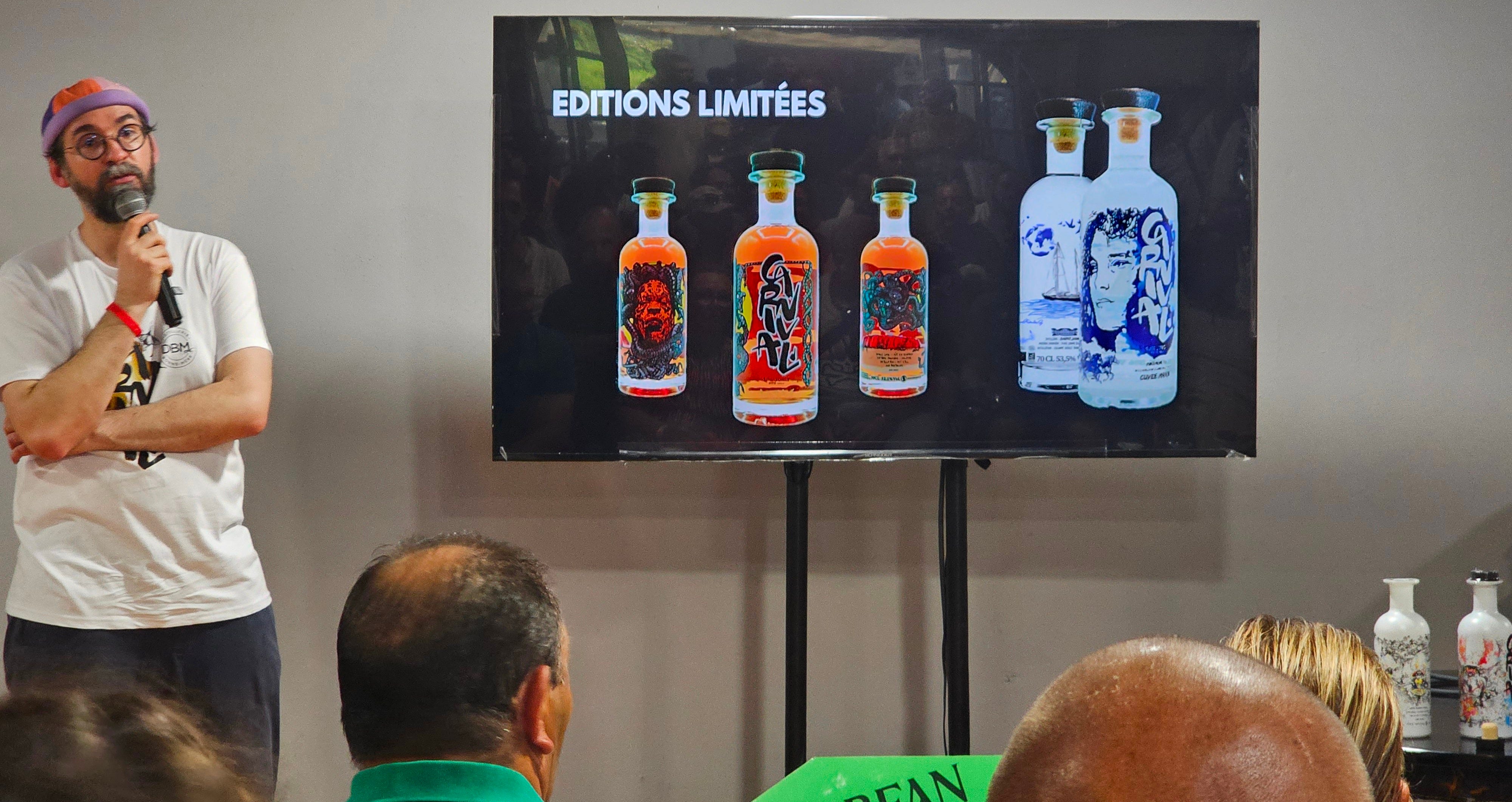
Carnival is clearly positioning itself as an accessible entry point into rum, with reduced bottlings aimed at a broad audience. That alone, however, would be selling them short.
While I did not have the opportunity to taste their entire lineup, the new Cuvée Victorien left a strong impression. Produced at Distillerie Bonne-Mère (DBM), this molasses rum aged for several years in ex-bourbon barrels delivers far more complexity than its approachable profile might suggest. Fruity and layered, with subtle leathery and lightly smoky notes, it shows that accessibility does not have to come at the expense of character.
Carnival may serve as a gateway for newcomers, but their rums show enough structure and character to remain interesting even for seasoned enthusiasts. The fact that the brand was represented on site by JoeyStarr himself, in his role as festival patron, added a strong cultural dimension to its presence.
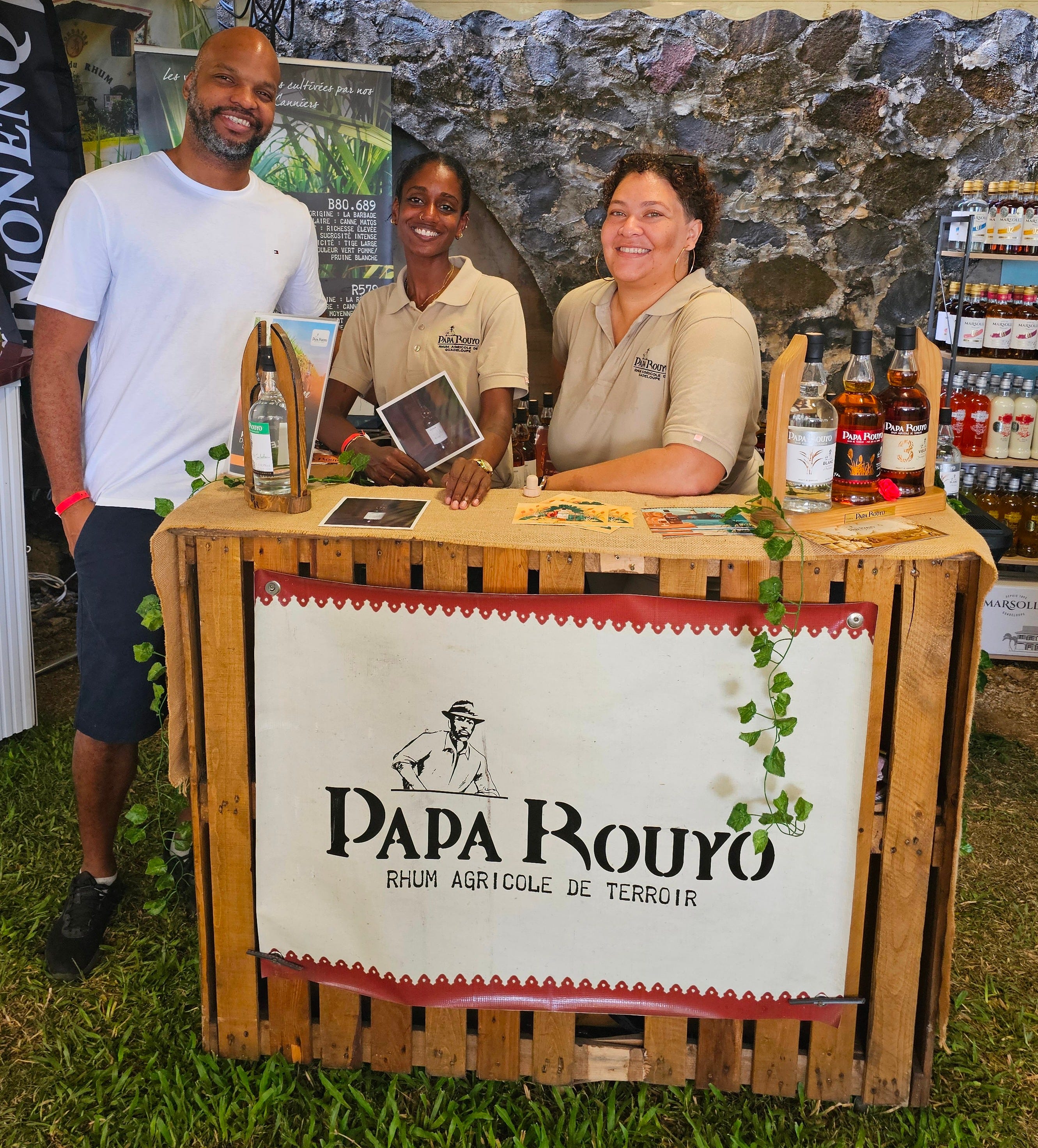
Papa Rouyo, swimming against the current
Papa Rouyo is a young distillery, and one that immediately stands out for going against the grain. While many Guadeloupean producers rely on the traditional Creole column still, Papa Rouyo operates a copper pot still. It is a deliberate and bold choice.
Their rum, made primarily from white cane, was one of the highlights of the festival for me. The white rum is expressive, clean, floral, and deeply enjoyable. The team behind the project is clearly passionate and technically sharp.
Their élevé sous bois was well executed, even if it is not the segment I naturally gravitate toward. Their aged rum, sourced from another distillery, drew less of my attention, but that feels secondary. Papa Rouyo’s identity is clearly forming and it is one worth following closely.
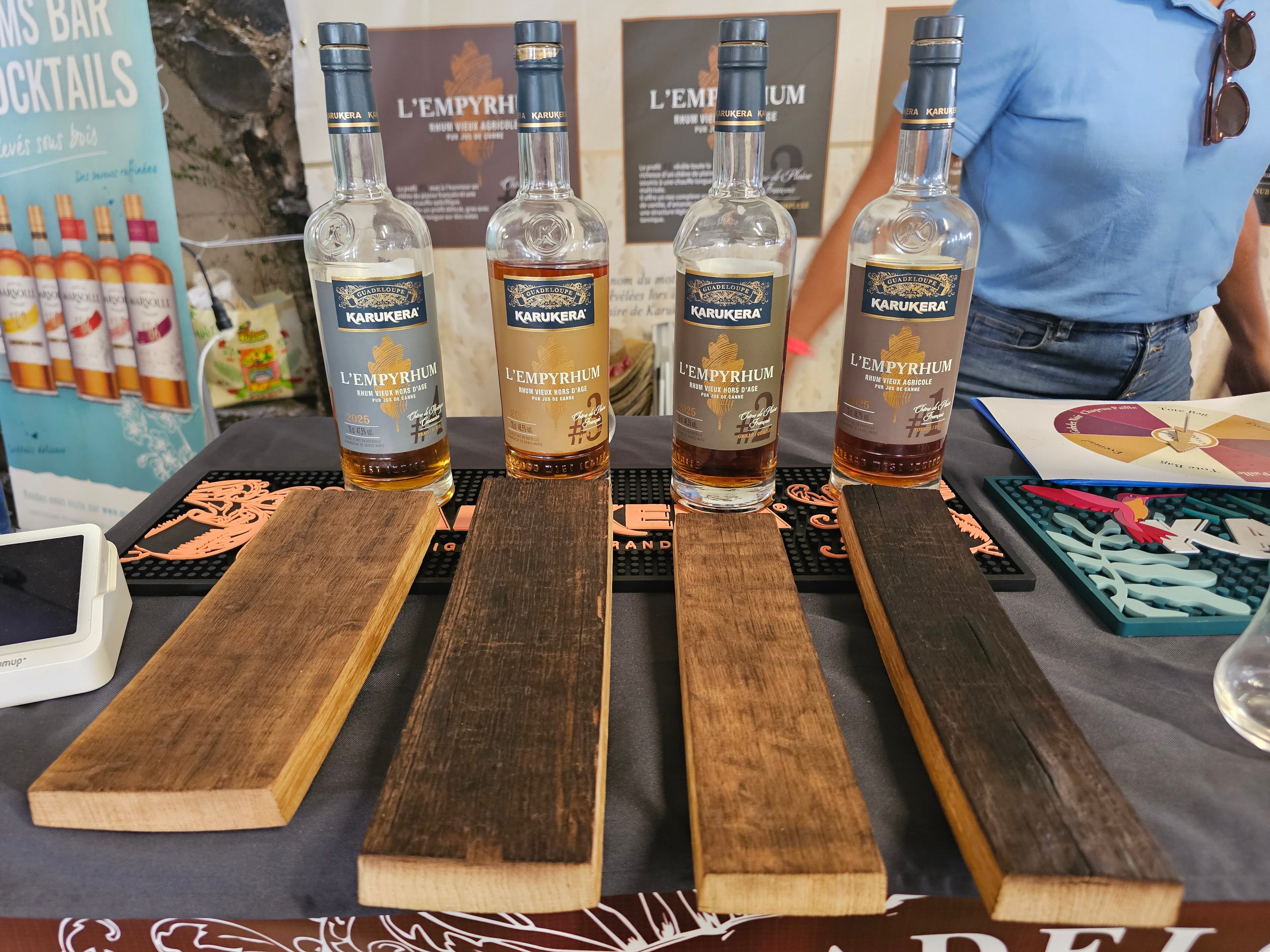
Karukera and the Empyrhum collection
Karukera continues to impress.
Beyond the quality of the rums themselves, what truly stood out were the conversations around wood management. The Empyrhum collection is a masterclass in how different types of oak, whether from plains or mountainous regions, influence aging through grain density, porosity, and extraction dynamics.
This level of technical discussion, shared openly on a festival floor, speaks volumes about the level of technical maturity Guadeloupean producers have reached.
A blind tasting that tells Guadeloupe’s story
The blind tasting session was one of the most effective ways to communicate Guadeloupe’s diversity in a single flight.
Here’s what we tasted, blind:
an agricole white rum from Longueteau,
an élevé sous bois from Papa Rouyo, distilled in a copper pot still,
a molasses-based XO rum from Distillerie Bonne-Mère,
the festival cuvée, a blend of two four-year-old Montebello rums finished in red wine casks (Saint-Aubin) and Pommeau casks, complemented by 10% of unaged Jamaican overproof rum.
It was educational, balanced, and revealing, particularly for those less familiar with the diversity of Guadeloupe rum.
Rum and cigar pairing, culture rather than gimmick
The rum and cigar pairing session, led by the president of the Caribbean Cigar Club, was another highlight. The president of the cigar club also currently serves as the president of the Club Rhum Guadeloupe, which likely explains the depth and coherence of the session.
The pairing was thoughtfully constructed and offered a genuine introduction to cigar tasting as a sensory experience, not just an accessory to rum.
Signals to watch: what CRFF says about the future of Guadeloupe rum
If CRFF is any indication, Guadeloupe is entering a particularly interesting phase.
The relative freedom offered by the IGP framework, compared to stricter AOC systems, allows for greater stylistic diversity and experimentation. This flexibility may have delayed international recognition in the past, but it is now becoming a strength.
Across the board, producers are demonstrating a stronger command of the full production cycle: cane cultivation, fermentation, distillation, and aging. At the same time, awareness of Guadeloupe’s diversity remains limited outside the Caribbean and France. Some excellent producers still fly under the radar, especially in the white and high-proof segments where quality-to-price ratios can be remarkable.
CRFF feels less like a showcase of the past and more like a preview of what’s coming next.
Looking ahead
Several producers hinted at upcoming releases and new directions, including projects involving longer fermentations, new distillation tools, and limited high-proof expressions. These are developments worth paying attention to, not as announcements, but as signs of a maturing and increasingly confident rum scene.
Guadeloupean rum is not trying to imitate other regions. It is defining its own voice, on its own terms.
If you want to understand where that voice is heading, the Caribbean Rum & Food Festival is one of the best places to experience it firsthand.